Thursday, March 27, 2014

DAR Supports CAB


With President Benigno S.Aquino III's signing of the Comprehensive Agreement on Bangsamoro (CAB) today, the DAR-Basilan provincial office supports this historic event with the entire autonomous region. May this milestone bring us lasting peace and development for a better nation.


Monday, March 10, 2014

Rural Infrastructure Support Status Report As of January 2014

The project impact of the government thru the Department of Agrarian Reform (DAR) is to enable Agrarian Reform Beneficiaries (ARBs) to reduce poverty and sustain their improved income and quality of life. The Second Agrarian Reform Community Project (ARCP2) is there to deliver rural infrastructure support as one of the components in attaining the objective of the government to improve capabilities and well being of poor and marginalized groups in the target communities. Rural infrastructure support caters to offer road projects like rehabilitation of farm-to-market road, ARC road concreting, construction of potable water system (Level II), and construction of multi-purpose centers.

For the province of Basilan, thirteen (13) sub-projects were approved by NSAC/RSAC since the inception of ARCP in 2009, four (4) of which are aimed for implementation this year upon completion of all required documents prepared by the local government units concerned.

Projects for Implementation As of January 2014

Municipality
ARC
Name of Sub-project
Sub-Project Cost
Area
Status
Lamitan
SCARBIDC
Rehab of FMR
P19,038,413.09
8 Kms
Completion of BER and other procurement docs
Lamitan
SCARBIDC
Concreting of ARC Road
P12,119,431.57
2 Kms
 Completion of BER and other procurement docs

Sumisip
TARBIDC
Construction of PWSL II
P11,625,317.76
1 Unit
For Rebidding/For advertisement
Maluso
CARBADECO
Concreting of Farm to Market Road
P31,438,280.18
5.26 Kms
Completion of docs/Requesting for the initial release


Relative to the on-going projects in the Province of Basilan, there is a slow pacing on its implementation due to the presence of insurgencies on the island. Peace and order condition is always the main problem and the heavy rainfall of the previous year due to climate change slowed down the completion of the projects. Basilan province has been seriously affected by typhoons and monsoon rains.  Only three (3) sub-projects are still for completion this year in TARBIDC, Sumisip; TABADECO, Tipo-Tipo; and TIPARBECO, Ungkaya Pukan.

On-going Projects As of January 2014

Municipality
ARC
Name of Sub-Projects
Sub-Project Cost
Area
Status
Sumisip
TARBIDC
Rehab of FMR
P34,578,919.77
9.98 Lms
34.04% Accom., 2nd tranche requested
Tipo-Tipo
TARBADECO
Concreting of ARC Road Network
P24,086,247.61
4.1431 Kms
86.69% work accomp. 2nd tranche requested
Ungkaya Pukan
TIPARBECO
Concreting of (Phil-Am) Boheh Pahu
P28,777,290.21


The local government units implement these sub-projects with funding under the ARCP II-LP with LGUs equity of 60%. The remaining six (6) approved projects are for revision of program of works due to price increase and completion of some documentary and pre-engineering documents. The DAR Provincial Office Rural Infra Support Section of Beneficiaries Development and Coordination Division (BDCD) works hard in monitoring, evaluating, following up with the LGU engineers as to their compliance of required documents to facilitate the immediate implementation of said projects in the province. As of to date, the Rural Support Group of BDCD-DAR Provincial Office connects its best to the implementing agency, the LGU and the NPCO with regards to the downloading of the initial releases of funds for the continuity of project works.


Wednesday, February 26, 2014

DAR Spearheads Round Table Discussion with Various Agencies

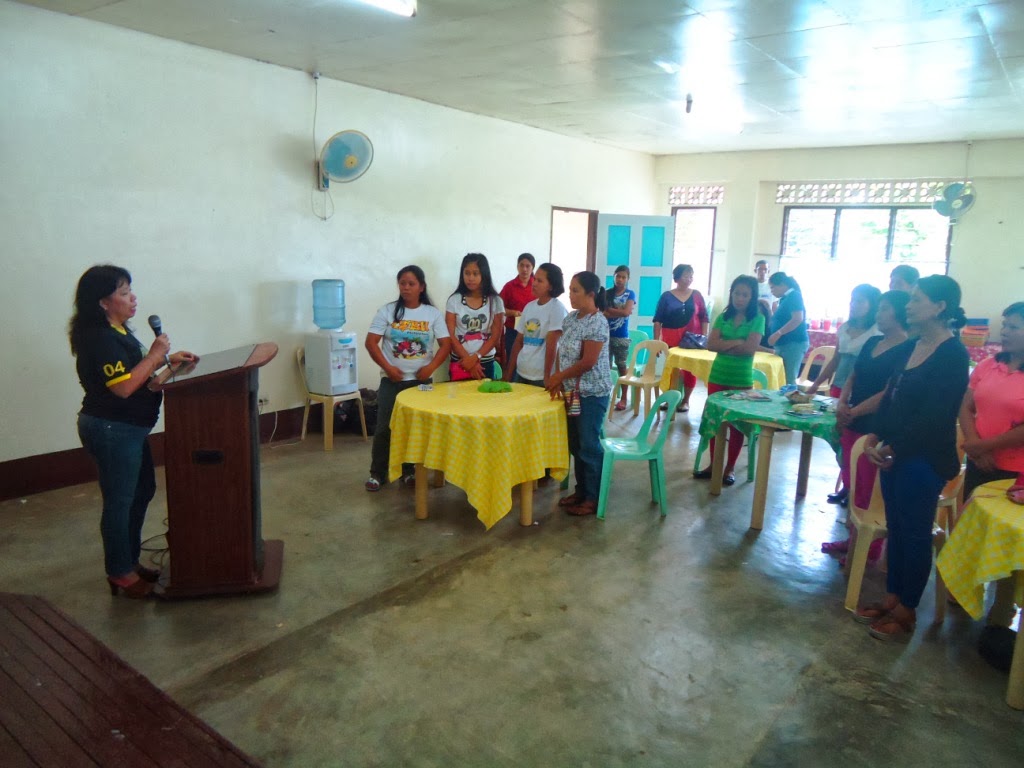
The Department of Agrarian Reform of Basilan, headed by PARO Suwaib Ismael, and the joint operations of Task Force Philippines and Task Force Archipelago of the Philippine Armed Forces and the U.S. Civil Affairs Team, led by Capt. Tanner Fleck, held a round table discussion at Camp Biel with different government and private offices and the academe.

The main driving force behind the discussion is the fact that agriculture is top economic driver and source of employment in Basilan where roughly half of this economic output and jobs come from the agrarian reform beneficiaries organizations. With thirteen (13) agrarian reform communities in Basilan,  eleven (11) of which are in ARMM and two (2) are under the jurisdiction of Region IX, each has experienced some levels of difficulty in staying afloat with profits and/or meeting its financial obligations. Instability within this industry affects the entire province and has the potential to become a security concern for the Philippine security force.

Lt. Col. Melisar Raymund Recaido, deputy commander of 104th Brigade, welcomes the participants in behalf of Col. Carlito Galvez, the brigade commander


PARO Suwaib Ismael hails the gathering as a breakthrough to massive changes in the cooperative movement

The discussion panel aims to enable a shift in mindset from agrarian community to commercial business, stabilize ARC operations through revenue stream diversification, improve ARC financial literal and understanding business management techniques, and set the conditions for increased private investment through business model development.

 Capt. Tanner Fleck, civil affairs team commander of Task Force Archipelago, gives the rationale/introduction of the round table discussion


Desired end state of the discussion is the establishment of a technical support program that is low cost, utilizing local resources; sustainable, institutionalizing the program; persistent, capable of long-term engagement with ARCs; and comprehensive, with scope covering all thirteen (13) ARCs.


DAR's Engr. Ronald Gadaingan presents an overview of agrarian reform cooperatives in Basilan

 UWARBMPC manager Rafael Enriquez, a former banker, shares his cooperative experience

 Rodel Ramonez of LARBECO also shares his cooperative experience from the point of view of a chairman of the board of directors

Technical support program encompasses basic financial literacy analysis, business management techniques, business model development and implementation, revenue stream diversification, and packaging business opportunities for financing.


Possible courses of action include outsourcing to a firm with expertise on certain fields, public-private partnership with universities, pattern a model cooperative program, conduct trainer’s training program within the DAR, grant through US Embassy or USAID, establish the spirit of America NGO, and establish cooperative exchange program.

UWARBMPC reacts to the issues besetting the ARB organizations in the province


Rafael Flores of DAR facilitates the workshop in identifying problems, issues, needs and concerns of the agrarian reform communities

Participants to the discussion are representatives two progressive ARB organizations of the province, Lamitan Agrarian Reform Beneficiaries Cooperative and United Workers Agrarian Reform Beneficiaries Multi-Purpose Cooperative, faculty members from Ateneo de Zamboanga and Basilan State College, Department of Labor, Department of Trade and Industry, and Provincial Agriculturist Office.

Tuesday, February 25, 2014

Business Planning Seminar for Cooperatives


Continuous development of progressive cooperatives in the province of Basilan has remained a key concern for the Department of Agrarian Reform in ARMM. So much have been poured into them in terms of technical assistance through capability building programs as well as financial resources to support the development of agribusiness initiatives among these agrarian reform beneficiaries, yet, the task of providing strategic intervention continues. This is true for less-developed cooperatives that are facing challenges in changing economic environment.

Since rubber is the main commodity, being produced and processed by most of the cooperatives, there is an urgent need to address dependency on a single-income source. The need for these cooperatives to have agri-business activities in order to diversify its income source and mitigate probable drops in rubber prices have become a main concern to government agencies and cooperative leaders alike. Supporting the need for diversification is the provision of business and entrepreneurship training as well as hands-on coaching process that will help in the implementation of strategic projects as well as further strengthening of the cooperatives in the face of external challenges.

 Participants from SCARBIDC ARC

The training program on business planning was geared to help the cooperatives understand the basic of business planning with emphasis on financial management as it impacts the way they manage their businesses. The importance of business planning in today’s world has been emphasized with the compelling need of small business owners or cooperatives and its members understand the need to manage their business activities effectively as they plan for their business’ future and meeting its needs. The training gave the participant better appreciation of the manner how their finances are managed and thus, enabling them to make right business decisions and provide for their future business needs. This is particularly true for a commodity-based business as in the case of rubber cooperatives. The business itself is vulnerable to price swings for rubber and planning ahead of the curve will help ensure the continued viability of their business operations. The training program was designed to address their present needs amidst the financial pressures to stay in business and meeting their financial obligations in a timely manner.  It also addressed the need to handle financial resources and business debts properly.

To augment the proposed business planning training program, an entrepreneurship and financial literacy training component was undertaken. This will complement the training on business planning which helps the participants planning to venture into business earn more income from their investments in small business undertakings. The provision of this training program gave participants another venue to increase their business net worth through the right approach of starting their businesses. This would address typical concerns on managing their risk capital and, at the same time, encourage savings through practical business practices in a less risky manner.


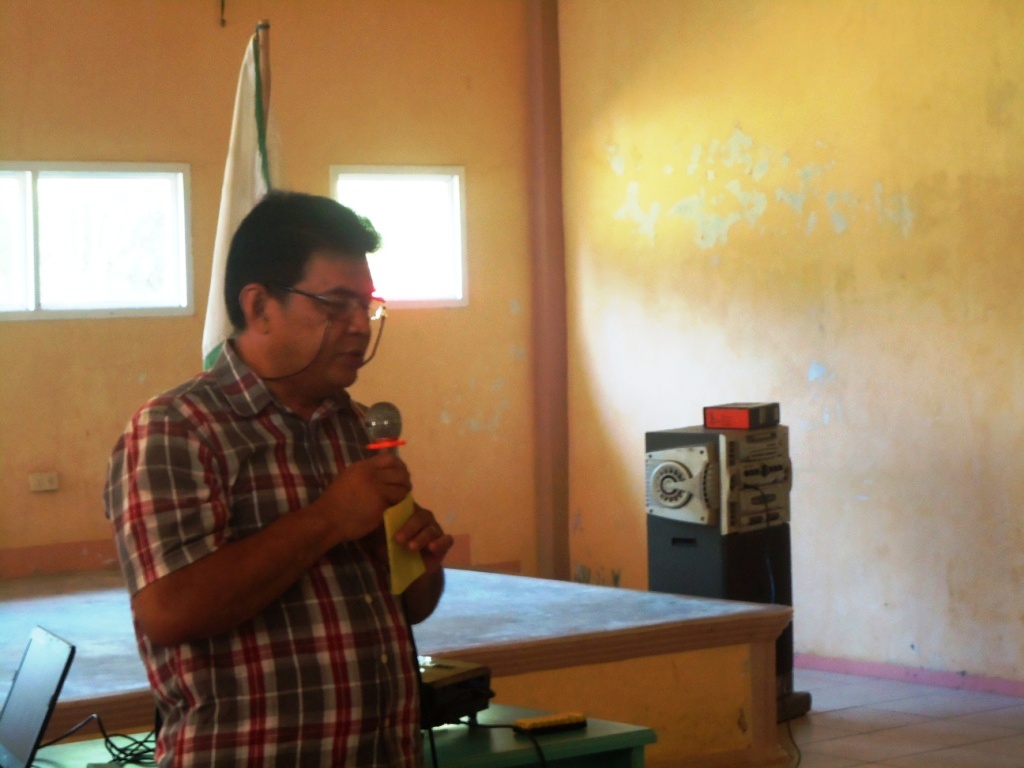
Antonio Peralta of FREEDOM, Inc.


The training was conducted at the helm of Antonio Peralta of the Foundation for Rural Enterprise and Ecology Development of Mindanao (FREEDOM), Inc. and rested on the following aims:

To validate the extent of understanding of business planning and entrepreneurship among the target cooperatives in view of the other training programs previously conducted;

To provide the targeted cooperatives participants with a clear understanding on the importance of business planning and entrepreneurship in their businesses;

To help participants implement a viable business plan that incorporates a financial action plan to help them deal with probable commodity price swings at the same time providing for future contingencies;

To stress the need to have a diversified income stream through other allied undertakings that the target cooperatives may wish to pursue in view of weaning them away from a single-income source; and

To provide the cooperatives participants an in-depth understanding of the processes involved in business planning which includes choosing the type of business they want to undertake through the business coaching process.


 MARBEDCO presents the coop's business plan

A series of workshop were undertaken that tested the participants’ entrepreneurial skills. The participants were also shown the importance of strategic marketing and the highlights of business plan emphasizing different parts as to its organization, manpower, methodology, marketing, and financial aspects. The rubber market trend was presented as well as the cause and effect of climate change that will greatly hurt business.


The training was attended by coop officials from Sta. Clara Agrarian Reform Beneficiaries Integrated Development Cooperative (SCARBIDC), Mangal Agrarian Reform Beneficiaries Development Cooperative (MARBEDCO), Canas Agrarian Reform Beneficiaries Agricultural Development Cooperative (CARBADECO), and Tairan Agrarian Reform Beneficiaries Agricultural Multi-Purpose Cooperative (TARBAMC) with Mahatallang Agrarian Reform Beneficiaries Multi-Purpose Cooperative (MARBEMPCO) as its guest participant.

Monday, February 24, 2014

Beauty Care for Gender and Development

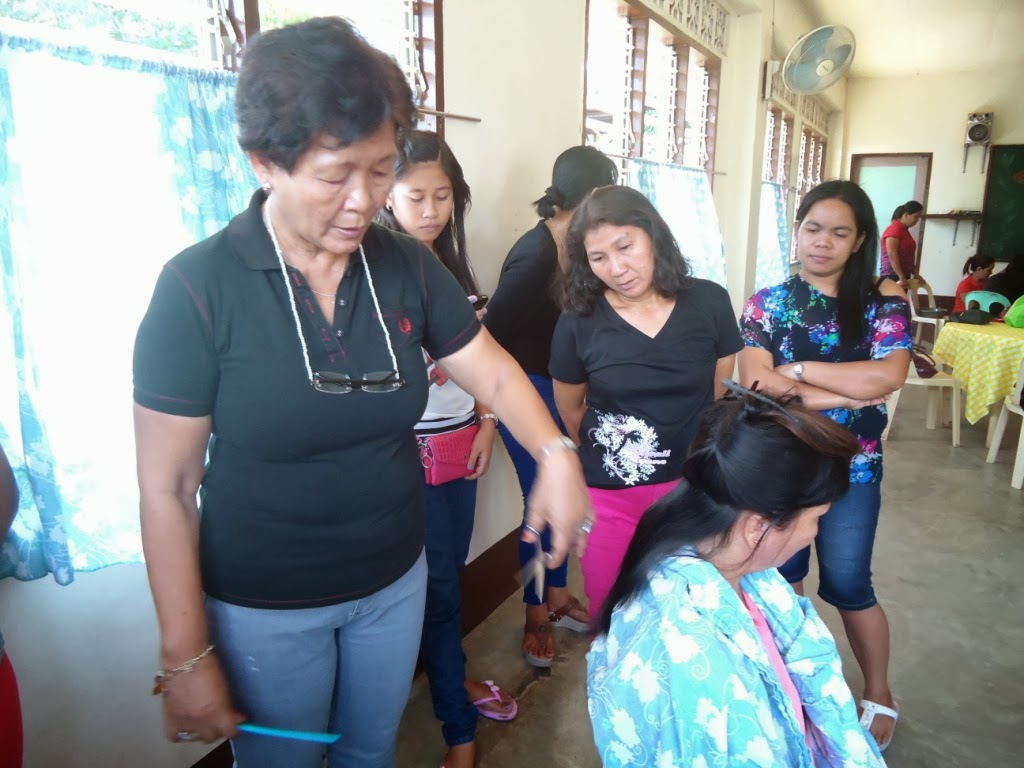
In support to Republic Act 7192 (Women in Development and Nation Building Act), Executive Order No. 273 (Philippine Plan for Gender-Responsive Development), and Republic Act 9710 (Magna Carta for Women) that provide for mainstreaming of gender in development plans and activities, twenty women from the agrarian reform communities  took arms with beauty tools to equip themselves with skills that could help bring food to their table.


This gender mainstreaming strategizes to make women’s, as well as men’s, concerns and experience an integral dimension of the design, implementation, monitoring and evaluation of policies and programs in all political, economic, and societal spheres so that women and men benefit equally and inequality is not perpetuated. It is in the process of assessing the implications for women and men of any planned action, including legislation, policies, or programs in all areas and at all levels.


The training seeks to achieve gender equality as a fundamental value that should be reflected in our development choices and transform the social and economic structures of a family into a mechanism where both women and men equally play active roles.

The women underwent lectures and hands-on activities on the following beauty areas:

Hand and foot spa


Pedicure and manicure


and hair cutting


The skills training was conducted through the partnership with the Isabela City Office of the Department of Labor and Employment.


Participating cooperatives are Sta. Clara Agrarian Reform Beneficiaries Integrated Development Cooperative, Inc. (SCARBIDCI) in Sta. Clara and Lamitan Agrarian Reform Beneficiaries Cooperative (LARBECO) in Limook, both of Lamitan City; Tumahubong Agrarian Reform Beneficiaries Integrated Development Cooperative (TARBIDC) in Tumahubong, Sumisip; Canas Agrarian Reform Beneficiaries Agricultural Development Cooperative (CARBADECO) in Canas, Maluso; and Tairan Agrarian Reform Beneficiaries Agricultural Multi-Purpose Cooperative (TARBAMC) in Tairan, Lantawan.


DARPO Basilan Conducts Lakbay Aral to the Davao Region

Thirty participants from the DAR provincial and municipal offices and selected cooperatives of Basilan went on a three-day plantation visits. The primordial objective of the activity is to get first-hand information on the advantages and disadvantages of going into individual farming. The participants held audience with selected ARB organizations in Davao del Sur, Davao del Norte, and Compostela Valley. The DAR provincial office focuses Comprehensive Agrarian Reform Program beneficiaries development on collective farmers' organizations.


DARPO-Davao del Sur with PARO Wilson Antiga


Presenting a certificate of appreciation to
Malita Agrarian Rural Workers Beneficiaries Multi-Purpose Copperative
Malita, Davao del Sur


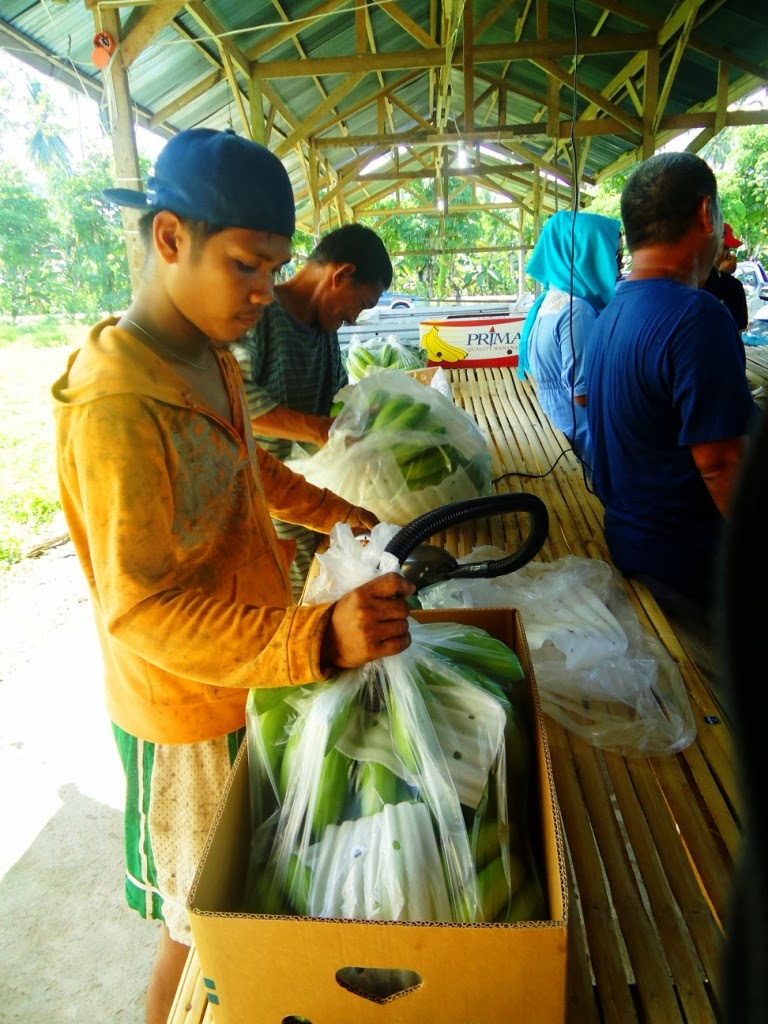
Getting first-hand information on how to pack Cavendish bananas for export...
Lacaron CARP Beneficiaries Association
Lacaron, Malita, Davao del Sur


DAR-Basilan and coop officials paid a call to the DAR-Region XI director Fidel Morales


Wadecor Employees Agrarian Reform Beneficiaries Multi-Purpose Cooperative
Carmen, Davao del Norte


Checkered Farm Agrarian Reform Multi-Purpose Cooperative
Panabo City, Davao del Norte


Checkered Farm Agrarian Reform Multi-Purpose Cooperative
Panabo City, Davao del Norte


Nabunturan Agrarian Reform Community Integrated Cooperative
Nabunturan, Compostela Valley


Mampising CARP Multi-Purpose Cooperative
Mampising, Tagnanan, Mabini, Compostela Valley


Tagnanan CARP Beneficiaries Multi-Purpose Cooperative emotionally received the certificate of appreciation from DAR-Basilan for hosting one of the plantation visits in Davao region.
Tagnanan, Mabini, Compostela Valley


A factory tour at Tagnanan CARP Beneficiaries Multi-Purpose Cooperative


Monday, May 6, 2013

DAR Conducts Membership Enhancement Seminar

One hundred agrarian reform beneficiaries (ARBs) of Sta. Clara Agrarian Reform Beneficiaries Integrated Development Cooperative (SCARBIDC) of Sta. Clara, Lamitan City benefited from a membership enhancement seminar conducted in the coop's training center.

Engr. Raymond Lintag, BDCD chief, stressed the importance of learning among the ARBs as part of their program for continuous education.

This is in an initial answer to the clamor of cooperatives from all over the provinces for refresher courses on their role as ARBs, coop members, and plantation workers. Also, there is a need for the ARBs to undergo such training as many of them are new, being successors to their parents or relatives. It can be recalled that the last massive training on membership enhancement was conducted in 1999 in partnership with Kasanyangan Foundation, Inc., a non-government organization based in Zamboanga City.


 Topics given were personal institution and value analysis, cooperative financial structure, roles and obligations of ARBs and coop members, rights of workers, and communication.

The seminar was given in two batches from April 23-26. Lecturers were Maricor Dans, training officer, Rafael Flores, Expedito Acejas from the DAR and Engr. Wesley Tan from the Isabela City office of the Department of Labor and Employment.


The participants enjoy some moments of ice breakers.


Handing out certificates to successful graduates.


A keepsake after their graduation.